The practice of perspective, or, An easy method of representing natural objects according to the rules of art : applied and exemplified in all the variety of cases, as landskapes, gardens, buildings of divers kinds, their appendages, parts, and furniture : with rules for the proportion and position of figures both in draught and relievo : also the manner of conducting the shadows, produced either by natural or artificial luminaries, and practical methods of drawing after nature, when the process of rules are not understood : a work highly necessary for painters, engravers, architects, embroiderers, statuaries, jewellers, tapestry-workers, and others concerned in designing : the whole illustrated with 150 copper-plates
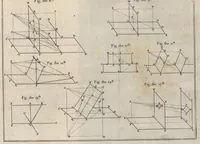
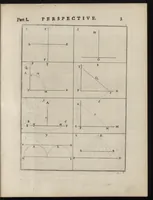
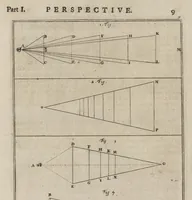
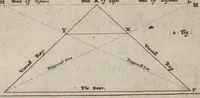
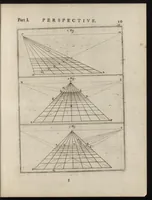
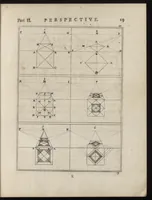
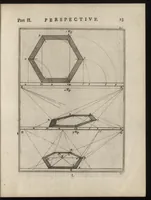
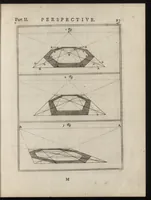
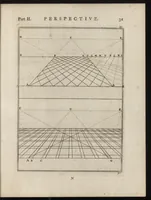
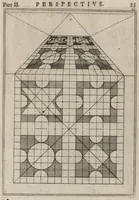
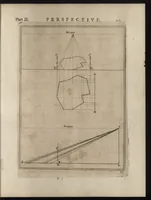
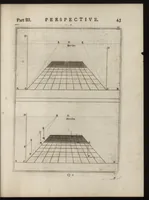
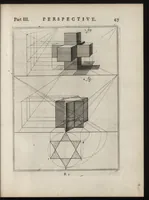
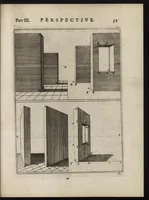
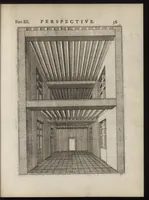
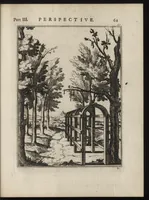
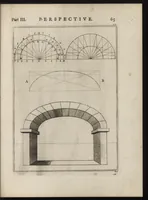
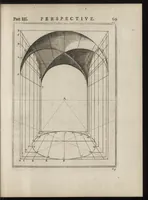
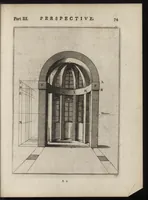
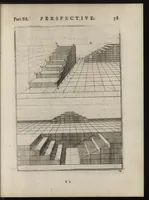
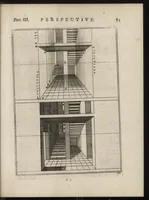
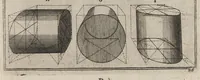
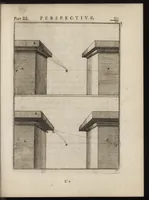
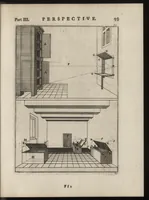
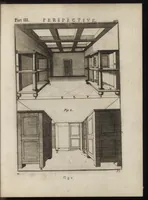
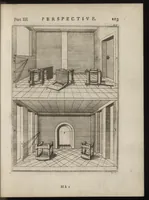
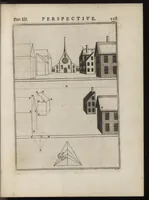
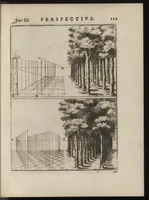
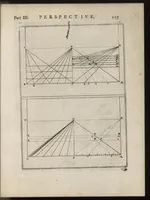
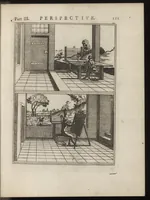
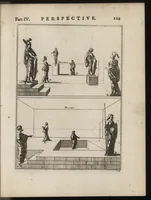
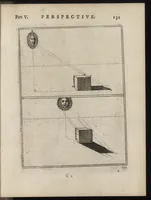
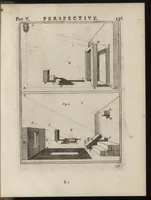
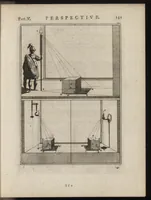
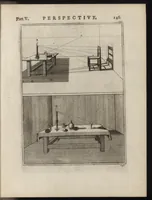
A 1765 London treatise on linear perspective, compiled from Jean Dubreuil's earlier work and printed by the Bowles family for painters, engravers, architects and craftsmen. Its copper-plate pages show step-by-step perspective constructions: receding tiled floors, vanishing-point grids, and stairs and interiors built from orthogonal lines. A designer could borrow these diagrams for schematic grids, depth cues, and the geometry of converging lines.